Darknet Markets 2026:
The dark web is part of the deep web but is built on darknets: overlay networks that sit on the internet but which can't be accessed without special tools or software like Tor. Tor is an anonymizing software tool that stands for The Onion Router — you can use the Tor network via Tor Browser.
| Darknet Market | Established | Total Listings | Link |
|---|---|---|---|
| TorZon Market | 2022 | 140+ | Onion Link |
| Nexus Market | 2024 | 600+ | Onion Link |
| Abacus Market | 2022 | 100+ | Onion Link |
| Ares | 2026 | 100+ | Onion Link |
| Cocorico | 2023 | 110+ | Onion Link |
Updated 2026-10-26
How Bitcoin's Privacy Fueled Safe Drug Trade on the Darknet
Bitcoin's architecture, which uses cryptographic keys instead of personal names, created a foundational layer of privacy for online commerce. This pseudonymous design aligned perfectly with the operational needs of darknet markets, where users prioritize discretion. These platforms leveraged this feature to establish a direct peer-to-peer trading environment, effectively removing traditional financial intermediaries from the transaction process.
The integration of Bitcoin with these markets demonstrated a functional model for secure, intermediary-free trade. Two critical innovations facilitated this:
- Private Transactions: While the blockchain is public, the pseudonymous nature of addresses allows parties to engage without revealing real-world identities, creating a barrier between financial activity and personal identification.
- Secure Escrow Services: The markets themselves often acted as a trusted third party, holding the buyer's bitcoin in escrow until the goods were received and confirmed. This mechanism, enforced by smart contracts or market protocols, significantly reduced the risk of fraud for both buyers and sellers, building trust within the ecosystem.
Every completed transaction is immutably recorded on the blockchain, providing a transparent and unforgeable ledger of the exchange. This combination of pseudonymity, peer-to-peer structure, and technological escrow shows how complex commerce can function securely without centralized institutions, fostering a self-regulating economic space.
How Darknet Markets Enable Secure Peer-to-Peer Trade
Darknet markets leverage Bitcoin's architecture to facilitate a pure form of peer-to-peer commerce, removing traditional intermediaries like banks or payment processors. This direct connection between buyer and seller is enabled by the blockchain, which acts as a public, tamper-proof ledger for finalizing transactions without revealing the parties' identities. The system employs multi-signature escrow services to enhance security and trust; funds are held in a secure wallet requiring two of three keys to release, preventing fraud by either party. This creates a self-regulating environment where private transactions and secure trade can occur based on cryptographic proof rather than personal trust or central authority, demonstrating a functional model for discreet and consensual exchange.
How the Public Blockchain Makes Darknet Trade Safe and Reliable
The public blockchain provides a foundational layer of security and transparency for darknet commerce. While user identities are protected by pseudonymous addresses, the permanent and verifiable record of every transaction prevents fraud in a trustless environment. This creates a system where both buyer and seller can independently confirm that a payment has been sent and received, which is a prerequisite for any direct peer-to-peer trade.
This immutable ledger directly enables the secure escrow services that are critical to these markets. Funds are held in a multi-signature escrow until the buyer confirms satisfactory receipt of goods. The transaction's progress is visible on the blockchain, ensuring that no single party can unilaterally steal the funds. This mechanism effectively replaces the need for a central, potentially corruptible authority, enforcing honest trade through cryptographic proof rather than personal trust.
The combination of private transactions and a public ledger facilitates a safe trading ecosystem. Participants engage in commerce with the assurance that their personal details are shielded, while the economic interaction itself is secured by an unchangeable record. This structure demonstrates how peer-to-peer markets can function efficiently and with reduced risk, leveraging Bitcoin's design to provide a practical framework for voluntary exchange.
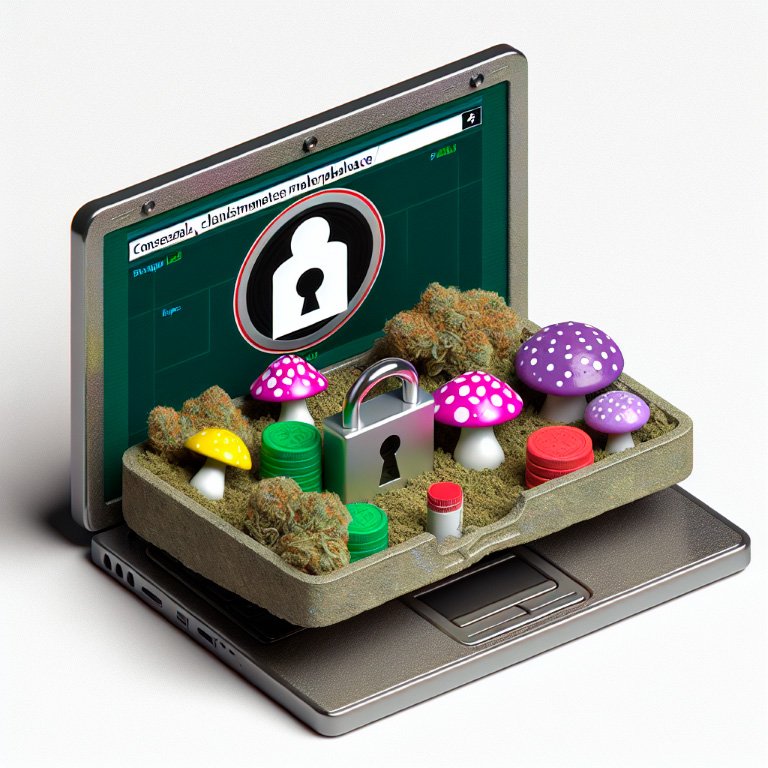
How Darknet Markets Enable Safe Peer-to-Peer Trade
The darknet marketplace ecosystem demonstrates a functional model for peer-to-peer commerce that operates entirely without traditional financial or governmental intermediaries. This is achieved through a combination of cryptographic tools and trust-minimizing protocols. Bitcoin provides the settlement layer, enabling direct value transfer between parties across borders. The public blockchain acts as a neutral, immutable record of these transactions, ensuring finality and preventing double-spending without requiring a trusted third party to validate payments.
For the transaction itself, secure escrow services, often multi-signature based, are integral. Funds are locked in a 2-of-3 multisig address controlled by the buyer, seller, and the marketplace. This system ensures that a seller is paid only after the buyer confirms receipt of goods, directly addressing the fundamental issue of trust in anonymous environments. Disputes are mediated by the platform's arbitration system, not by an external legal authority.
The privacy of participants is maintained through several layers:
- The use of pseudonymous Bitcoin addresses dissociates transactional activity from real-world identity.
- Buyers and sellers communicate using end-to-end encrypted messaging.
- Operational security (opsec) practices, like avoiding identity-revealing information, are standardized within the community.
This creates an environment where commerce for various goods, including recreational drugs, can occur with reduced risk of fraud compared to unregulated street dealings. The model proves that complex trade can be coordinated through decentralized technology stacks and game-theoretic incentives, rather than centralized institutions, offering users autonomy, choice, and a mechanism for secure, private exchange.