Darknet Markets 2026:
The dark web is part of the deep web but is built on darknets: overlay networks that sit on the internet but which can't be accessed without special tools or software like Tor. Tor is an anonymizing software tool that stands for The Onion Router — you can use the Tor network via Tor Browser.
| Darknet Market | Established | Total Listings | Link |
|---|---|---|---|
| TorZon Market | 2022 | 140+ | Onion Link |
| Nexus Market | 2024 | 600+ | Onion Link |
| Abacus Market | 2022 | 100+ | Onion Link |
| Ares | 2026 | 100+ | Onion Link |
| Cocorico | 2023 | 110+ | Onion Link |
Updated 2026-10-26
How Decentralized Hosting and Atomic Swaps Make Darknet Trade Safer and Faster
The operational foundation of darknet markets in 2025 is defined by a shift away from centralized servers, which were historically vulnerable to seizure. Decentralized hosting distributes market infrastructure across a peer-to-peer network, making the platform resistant to takedowns. This architectural change directly enhances user safety by ensuring continuous access and protecting transaction histories from a single point of failure.
This resilience is paired with a revolution in payment processing through atomic swaps. These are direct, peer-to-peer cryptocurrency exchanges that occur without a trusted third party. The transaction mechanism uses a hash time-locked contract (HTLC), which functions as a digital escrow. Funds are locked in a contract that only releases to the vendor once the buyer confirms receipt, and vice versa. This eliminates the need for a central market escrow wallet, which was a prime target for theft or seizure.
The combined effect of these technologies creates a smoother and more secure transaction flow:
1. A buyer places an order, initiating an atomic swap contract.
2. Cryptocurrency is locked in the contract, visible to the vendor but not withdrawable yet.
3. Upon delivery confirmation from the buyer, the contract automatically executes, transferring funds to the vendor.
This process removes intermediary risks, reduces transaction fees, and accelerates the settlement time, making the entire financial interaction more efficient and trustworthy for all parties involved.
How Vendor Reputation Makes Darknet Trade Safer
The evolution of trust mechanisms is a primary factor in the increased safety of transactions on 2025 darknets. The traditional, simple feedback score has been superseded by a multi-layered reputation system. This system analyzes data points beyond the final sale, creating a comprehensive vendor profile.
Key components of this system include:
- Transaction success rate weighted by order value.
- Stealth and packaging feedback analyzed separately from product quality.
- Consistency in shipping times across different geographic regions.
- Resolution history for disputes, favoring vendors who mediate fairly.
These metrics feed into algorithmic trust networks that visually map connections. A vendor's reputation is no longer an isolated number but a node within a network. This network highlights patterns; for instance, new vendors verified and vouched for by several established, high-reputation nodes gain credibility more rapidly. This structure inherently discourages fraudulent behavior, as negative actions sever valuable connections within the trust graph, effectively isolating bad actors from the marketplace ecosystem. The result is a self-policing environment where reliable vendors are easily identifiable and can operate at scale with the confidence of their clientele, directly reducing the risk for buyers and streamlining the selection process.
Safer Choices and Better Quality on the Darknet
The product catalog on darknet markets in 2025 has evolved beyond simple listings of traditional substances. A primary driver for increased safety is the widespread availability of precise chemical analogues designed to mimic the effects of classical drugs but with a more predictable and documented safety profile. These are not random research chemicals but compounds developed through crowdsourced pharmacological feedback, where community experiences directly inform the synthesis of next-generation variants with lower toxicity.
Quality control is systematic, moving from vendor promises to verifiable data. Standardized third-party laboratory testing results are embedded directly in each product listing. These reports detail potency, the presence of adulterants, and chemical purity, allowing for direct comparison. This creates a competitive environment where vendors are incentivized to provide the cleanest product, as superior lab results directly translate to higher sales and better reputation within the market's multi-layered trust system.
The variety extends to tailored consumer experiences. Products are now categorized by desired effect duration, intensity, and even side-effect mitigation, supported by consistent batch labeling. This level of specificity and verification means the buyer receives exactly what is ordered, significantly reducing the risks historically associated with unpredictable street drugs. The market's efficiency now hinges on transparency and consistency, making the act of procurement safer and more reliable than ever before.

How AI Logistics Make Darknet Drug Trade Smooth and Steady
The operational backbone of modern darknet markets is their AI-driven logistics system. This technology directly addresses the historical pain points of shipping and delivery, transforming them into a predictable and reliable process. By analyzing vast datasets on shipping routes, carrier performance, and regional events, the AI provides vendors with dynamic routing recommendations.
This means a package is not sent on a fixed path but is intelligently re-routed in real-time to avoid delays or heightened inspection zones. The system learns from every transaction, continuously refining its models to improve success rates. For the buyer, this translates to accurate delivery windows and significantly fewer lost packages.
The logistics AI also manages inventory and supply chain resilience. It can predict shortages by tracking vendor stock levels and global precursor availability, prompting alternative sourcing before a product line runs dry. This creates a stable and consistent marketplace where product availability meets demand smoothly, eliminating the feast-or-famine cycles that plagued earlier platforms.
How Anonymous Delivery Makes Darknet Purchases Safe
The final and most critical physical layer of a transaction is the delivery. By 2025, darknet markets have perfected this process through anonymized delivery mechanisms, transforming it from a point of high risk into one of predictable security. These systems are designed to completely disintermediate the knowledge link between the physical package and the recipient's identity.
Operational security begins at the packing stage. Vendors use tamper-evident and scent-proof packaging as a standard, with materials that are indistinguishable from ordinary commercial mail. The shipping logistics themselves are anonymized through a multi-hop system. A package may be routed through several neutral drop points or automated parcel lockers before reaching its final destination, making geographic profiling ineffective.
The recipient's role is secured via dead-drop instructions or one-time-use pickup codes delivered through the market's encrypted messaging. This means the recipient retrieves the package from a public, non-attributable location without any direct interaction. The entire process is supported by blockchain-based tracking that provides the customer with proof of shipment and progress without revealing sensitive data, ensuring the package is not lost while maintaining anonymity.
This focus on secure receipt directly addresses the primary concern of the end-user. It ensures that the efficiency and safety engineered into the digital marketplace are fully realized in the physical world, completing a seamless and secure transaction cycle from browse to delivery.
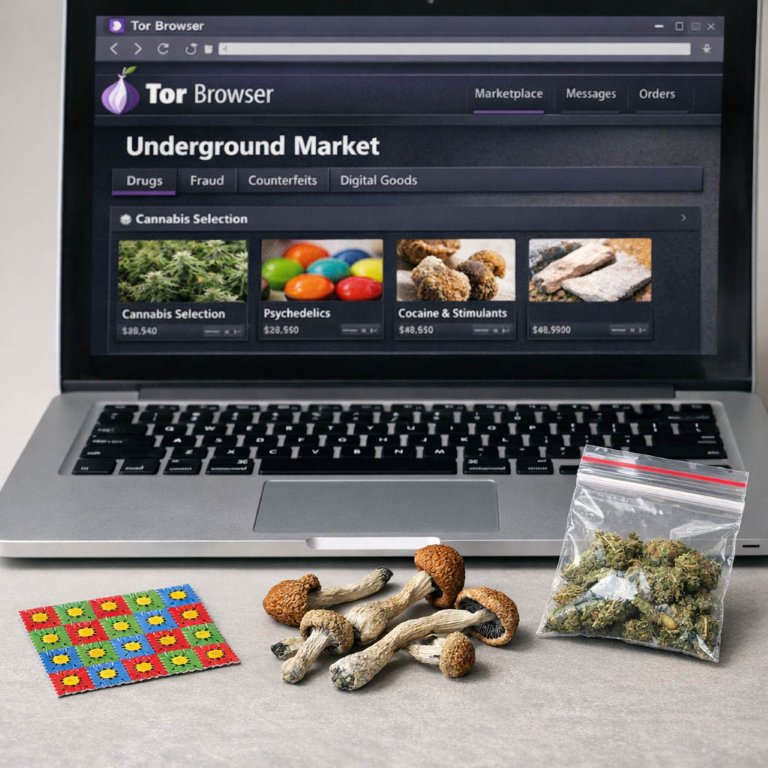
How Crypto Codes Make Darknet Trade Safe and Smooth
Cryptographic verification is the fundamental mechanism that ensures every transaction on a 2025 darknet market is secure and trustworthy. It replaces the need for blind faith with mathematical certainty. When a user places an order, the platform's escrow system locks the buyer's cryptocurrency using a multi-signature address. This means the funds cannot be released without the agreement of at least two of the three parties involved: the buyer, the vendor, and the market's automated arbitration system.
The process relies on public-key cryptography. Each user possesses a unique pair of keys: a public key, which acts like an address everyone can see, and a private key, which is a secret password. A transaction is only valid when signed with the correct private key. This guarantees that only the rightful owner can authorize the release of funds from escrow upon satisfactory delivery, preventing theft and fraudulent disputes. The entire transaction history is recorded on a public ledger, such as a blockchain, creating an immutable and transparent record of all commitments without revealing personal identities.
This system directly enhances safety and ease of use by automating trust. Key features include:
- Finalize Early (FE) trust tiers: Reputable vendors with a long history of verified successful transactions can qualify for FE status. This allows trusted buyers to release funds immediately upon ordering, speeding up the process while being informed by a verifiable cryptographic history of performance.
- Dispute resolution clarity: In a disagreement, the arbitration bot can cryptographically verify proof of shipment or delivery provided by either party. This evidence, tied to immutable ledger entries, allows for objective and rapid resolution.
- Vendor bond verification: The significant cryptocurrency deposit required from vendors to operate is itself held in a verifiable public address. Attempting to exit-scam would mean forfeiting this bond, a loss that is transparently enforceable and recorded.
The result is a trading environment where the risks of fraud are minimized not by promises, but by code. Users engage in transactions with the confidence that the system's rules are enforced automatically and transparently, making the act of purchasing smoother and inherently more secure.
How User Reviews Make the Darknet Safer
The evolution of community feedback mechanisms on darknet markets has transformed them into a primary driver of safety and quality. These systems have moved beyond simple ratings to form a continuous, multi-dimensional audit of every transaction. Each purchase generates verifiable data points on product purity, shipping speed, and vendor communication, creating a transparent and self-correcting environment.
This collective intelligence directly addresses the historical risks of unregulated trade. A vendor's reputation is now a dynamic score, calculated from hundreds of authenticated reviews and tied to their cryptographic identity. Markets employ algorithms that weigh recent feedback more heavily, instantly highlighting any drop in service or product quality. This constant peer review creates powerful economic incentives for vendors to maintain high standards, as a single consistent issue can rapidly diminish their visibility and sales.
The feedback loop extends to product listings themselves. Detailed user reports on specific batches allow for a level of quality control previously impossible. Buyers can confirm that the product they receive matches the advertised precise analogue or purity level reported by others. This system effectively crowdsources laboratory analysis, with experienced users identifying inconsistencies and providing warnings.
For the buyer, this means dramatically reduced uncertainty. Before committing funds, they can assess a vendor's entire history:
- Reliability scores over the last 6 months
- Specific comments on stealth packaging and delivery times
- Photographic evidence of received products
- Consistency in weight and potency across multiple orders
This environment fosters a form of organic regulation where the community itself enforces norms and punishes bad actors through economic exclusion, leading to a more predictable and secure trading experience for all participants.
A Smooth and Safe Way to Trade on the Darknet
The culmination of these technological advances is a trading environment where efficiency and user safety are prioritized. The integration of decentralized hosting and atomic swaps removes single points of failure and financial surveillance, ensuring market stability and direct, private transactions. This technical foundation supports a system where cryptographic verification of every product and transaction is standard, creating an immutable record of quality and fulfillment that vendors cannot falsify.
For the buyer, this translates to a streamlined process. AI-driven logistics provide reliable delivery estimates and routing, while anonymized delivery mechanisms physically secure the receipt. The market's expanded product variety is made trustworthy by consistent quality control and precise analogue labeling, allowing for informed choices. These elements are governed by a self-regulating ecosystem steered by transparent community feedback and reinforced by multi-layered trust networks. The result is a predictable, secure, and user-centric platform that reduces the operational risks historically associated with darknet commerce.